


Power Flushing in Ealing, Hillingdon & Uxbridge — Central Heating Power Flush
Cold radiators, a noisy boiler, and heating that costs more to run than it should — these are the classic signs of sludge in your central heating system. A central heating powerflush clears it out, restoring even heat, quieter running and lower bills. We carry out power flushing in Ealing, Hillingdon, Uxbridge and across West London, 7 days a week.
There's no callout charge — and our Gas Safe registered, CIPHE-member engineers will tell you honestly whether a power flush is what your heating system actually needs before you commit to one, and give you a fixed price quote for the work. All work is fully insured and comes with a six-month warranty.
Call now for a free quote on 07494 691 692 — 24 hours a day, 7 days a week.

What Is a Power Flush?
Your central heating system is a closed loop of water circulating through the boiler, pipes and radiators. Over the years, that water corrodes the inside of the steel radiators and pipework, producing a black, sludgy iron oxide — often called magnetite. Limescale builds up too, especially in a hard water area like West London.
That sludge and scale collects at the bottom of radiators and in the narrow pipework around the boiler, slowly choking the flow. A power flush pumps a cleaning solution through the whole system at high flow (but low pressure, so it's safe for the pipework), dislodging the build-up and carrying it out of the system. Think of it as a deep clean for your central heating — the debris that's been throttling your heating is forced out and flushed away.
Once the system runs clear, we add a corrosion inhibitor to slow the sludge coming back, and we'll usually recommend a MagnaClean magnetic filter to catch magnetite before it can settle again.
Signs Your System Needs a Power Flush
Sludge builds up gradually, so the symptoms creep in over a season or two — and higher energy bills are often the first clue that the system is working harder than it should. The common signs your central heating needs a power flush are:
- Radiators cold at the bottom but warm at the top — the classic sign of sludge settling in the base of the radiator
- Some rooms much colder than others, or radiators furthest from the boiler barely warming up
- The heating takes a long time to warm up from cold
- A noisy boiler — banging, knocking or kettling sounds as restricted flow causes the heat exchanger to overheat
- Radiators that need frequent bleeding, or that are cold despite being bled
- Dirty, black water when you bleed a radiator
- The boiler cutting out and needing resetting
Cold spots at the top of a radiator usually mean trapped air and just need bleeding — that's not a flush. Cold at the bottom is sludge, and that's what a power flush fixes. If you're not sure which you've got, we'll diagnose it before recommending any work.
The Benefits of a Power Flush
A clean central heating system is a more efficient one. By removing the sludge and debris that force your boiler to work harder, a power flush can reduce energy consumption by as much as 25% on a badly affected system. Clearing it out means:
- Lower energy bills - the boiler reaches temperature faster and uses less energy to heat your home
- Even heat distribution across every radiator, with no cold spots or cold rooms
- A quieter boiler and system - no more banging, kettling or strange noises
- A longer system lifespan - sludge is one of the biggest causes of premature boiler and pump failure
- Fewer breakdowns and more reliable heating through winter
- Faster, more efficient warm-up from cold
Power flushing is a popular cleaning method precisely because it delivers a comprehensive clean relatively quickly and at a fraction of the cost of replacing the system. If your heating is struggling, a power flush is worth ruling in before you assume the boiler itself needs replacing — see our boiler repair and servicing page if you think the boiler may be at fault.
Power Flushing Before a New Boiler
If you're having a new boiler fitted, a power flush is almost always needed first — and most manufacturers require it. Fitting a new boiler onto a system full of old sludge will quickly clog the new heat exchanger, and doing so can invalidate your boiler warranty. A system clean before installation protects both the new boiler and its guarantee.
We can power flush the system as part of a boiler installation, or as a standalone job ahead of an installation someone else is carrying out.
Power Flush & MagnaClean Filter Installation
A flush cleans the heating system that's there now — but the corrosion that created the sludge doesn't stop. The best way to keep the system clean afterwards is a magnetic filter, such as a MagnaClean, fitted to the pipework near the boiler.
The filter uses a powerful magnet to catch magnetite sludge as the water circulates, trapping it before it can settle in your radiators and heat exchanger. It's emptied and checked at each annual boiler service. Fitting a MagnaClean at the same time as a power flush is the most cost-effective combination — you clean the system and protect it in a single visit, and many boiler warranties now require a magnetic filter to be fitted.
We also carry out MagnaClean servicing as part of an annual boiler service, cleaning out the filter and checking the inhibitor levels so your system stays protected year after year.
What Happens During a Power Flush
A power flush is a high-flow, low-pressure cleaning process — the machine moves water through the heating system fast enough to lift sludge and debris, but at a low pressure that's safe for your pipes and radiators. It typically takes around 6 to 8 hours, depending on the size of the property and how much build-up there is. A small flat with a few radiators is quicker; a large house with a heavily sludged system takes longer. Our process:
- We lay down dust sheets to protect your floors, then connect the power flushing machine to your central heating system
- We run cleaning chemicals through the whole system to break down the sludge, scale and mineral deposits
- Every radiator is flushed individually, so each one is cleared properly rather than just the easy ones nearest the boiler
- We flush the system through with clean water until it runs clear, disposing of the wastewater down a suitable outside drain
- We add a corrosion inhibitor to protect against future rust and sludge build-up
- We fit or check a MagnaClean magnetic filter if you'd like one, to keep the system clean long term
- We test the system and confirm all the radiators are heating evenly before we leave
The Which? guide to power flushing is a useful independent overview if you'd like to read more about the process and when it's worthwhile.
What Affects the Cost of a Power Flush?
Power flushing is a quoted job rather than a fixed-rate one, because no two central heating systems are the same. The main things that affect the cost are:
- The number of radiators - each one is flushed individually, so more radiators means more time on the job
- The size and type of property - a one-bed flat is a smaller job than a four-bed house
- How sludged the system is - a heavily blocked system that hasn't been cleaned in years takes longer than a light maintenance flush
- The pipework - older or microbore systems can need extra care and time to flush thoroughly
- Whether you add a MagnaClean filter at the same time
There's no callout charge, and we'll give you a clear, fixed price quote before any work starts — so you know the full powerflush cost up front, with no surprises. Ask us for a free quote and we'll talk you through exactly what's involved. A power flush is almost always a fraction of the cost of a new boiler, and often prevents needing one, so it tends to pay for itself in efficiency and avoided boiler breakdowns.
Power Flushing in Ealing
We're based in Ealing, so we're the fast local choice for power flushing across the borough — West Ealing, South Ealing, Acton, Hanwell, Greenford and Perivale included. West London's hard water makes limescale build-up more likely, so systems here benefit from flushing more than most.
Power Flushing in Hillingdon & Uxbridge
We cover Hillingdon, Uxbridge, Hayes, West Drayton, Ickenham and Ruislip for both domestic and commercial power flushing. Whether it's a single cold radiator or a whole system that's never quite warm, we can help.
Power Flushing Across West London
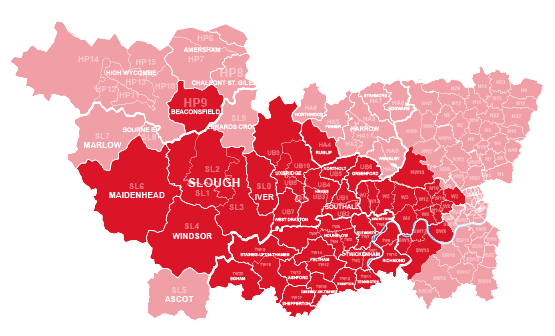
Beyond Ealing and Hillingdon we cover the wider West London area - Chiswick, Hammersmith, Fulham, Kensington & Chelsea, Richmond, Twickenham, Teddington, Hounslow, Brentford, Isleworth and out towards Staines, Slough and Windsor. See the full list below or check our coverage map.
Domestic & Commercial Power Flushing
We power flush central heating systems for homeowners, landlords and commercial properties across West London. For landlords, a flush and a magnetic filter keep tenants' heating reliable and cut down on winter callouts. For commercial clients - offices, shops, care homes and larger premises - we can work around your opening hours to minimise disruption.
Being a local plumber, we're never far from where you need us.
Power Flushing - Frequently Asked Questions
How much does a power flush cost?
There's no callout charge - you only pay for the work. The cost depends mainly on the number of radiators, the size of the property and how sludged the system is, so we'll give you a clear quote before starting. A power flush is a fraction of the cost of a new boiler, and often prevents needing one.
Is a power flush worth it?
If your system genuinely has a sludge problem - cold radiators, a noisy boiler, dirty water when you bleed a radiator, then yes. A power flush restores efficiency, can cut energy use by up to 25% on a badly affected system, and extends the life of the boiler and radiators. If your system doesn't need one, we'll tell you honestly rather than sell you a flush you don't need.
How long does a power flush take?
A power flush typically takes around 6 to 8 hours, depending on the size of the property and how much sludge has built up. A small flat with a few radiators is quicker; a large, heavily sludged system takes longer.
How long does a power flush last?
A well-flushed system treated with a corrosion inhibitor, and protected by a magnetic filter, can stay clean for many years. How long it lasts depends on the age and condition of the system and your local water hardness — in a hard water area like West London, systems silt up faster. Fitting a MagnaClean filter is the single best way to make a flush last.
Will a power flush fix my cold radiators?
If one or more radiators are cold at the bottom, yes - that's sludge, and flushing it out is exactly the fix. If they're cold at the top, that's usually trapped air and only needs bleeding. We'll diagnose which it is before recommending a flush.
Do I need a power flush before a new boiler?
Almost always. Most boiler manufacturers require the system to be cleaned before a new boiler is fitted, and skipping it can invalidate the warranty as well as quickly clogging the new heat exchanger. We can flush the system as part of the installation.
Can you power flush microbore pipework?
Yes. Microbore systems - with their narrow 8mm or 10mm pipes — are actually more prone to sludge blockages precisely because the pipes are so narrow, so they often benefit most from a flush. They need a bit more care and time to clear thoroughly, and our experienced engineers know how to flush microbore without damaging it.
How often should a system be power flushed?
There's no fixed schedule - it depends on the system's age, condition and water hardness. Many systems go years between flushes, especially with a magnetic filter and inhibitor keeping them clean. Fitting a MagnaClean after a flush greatly reduces how often you'll need another.
What's the difference between a power flush and a chemical flush?
A chemical flush circulates cleaner using the system's own pump and is gentler but less thorough. A power flush uses a dedicated high-flow machine to physically force the sludge and debris out, giving a far more complete clean. For a system with significant build-up, a power flush is the more effective option.
Can a plumber do a power flush, or do I need a specialist?
A qualified heating engineer with the right specialist equipment can carry out a power flush - you don't need a separate specialist firm. Our Gas Safe registered, CIPHE-member engineers do it as a routine part of our heating services.
Will a power flush damage an old system?
Power flushing is a low-pressure process and safe for sound pipework. On a very old or already-leaking system, aggressive sludge removal can occasionally expose a weak point that was partly blocked by the sludge itself - we'll assess the system first and talk you through any risk before starting.
Gas Safe Registered, CIPHE-Member Engineers
Our qualified engineers are Gas Safe registered and members of the Chartered Institute of Plumbing and Heating Engineering (CIPHE), the professional body for the UK plumbing and heating industry, founded in 1906. Being Gas Safe registered means they're qualified to do the job properly and safely on any gas central heating system. Our experienced heating engineers work 24 hours a day, 7 days a week, 365 days a year — all work fully insured and backed by a six-month warranty.
Related Services
- MagnaClean Filter Installation & Servicing
- Boiler Repair & Servicing
- Boiler Installation
- Leaking Radiator Repair
- Leak Detection
- View all our plumbing & heating services
If your heating isn't performing like it should, call 07494 691 692 any time — we'll tell you honestly whether a power flush is the answer.
Covereage Areas:
We are based in Ealing, but we cover West Ealing, Acton, Ashford, Barnes, Beaconsfield, Brentford, Chelsea, Chiswick, Egham, Feltham, Fulham, Greenford, Hammersmith, Hanwell, Hayes, Heathrow, Hillingdon, Hounslow, Ickenham, Isleworth, Iver, Kensington, Kew, Ladbroke Grove, Northolt, Notting Hill, Paddington, Perivale, Putney, Ruislip, Slough, Southall, Staines, Stanwell, Sudbury, Sunbury, Teddington, Twickenham, Uxbridge, Wandsworth, West Drayton, Windsor, Wraysbury all of the west London area, and the surrounding areas. Check the area map for more information.
We supply both businesses and residential customers in the London and surrounding areas - and as we are a local plumber we are never far from where you need us.
Please don’t hesitate to get in touch on
07494 691 692
We know that when a boiler goes wrong, or something starts to leak it can be a stressful and unpleasant experience. That’s why we are available 24 hours a day! Helping you get back on track.
Helping People 24/7
We understand what it's like, everyone works longer hours, commutes more and has less time in their busy schedule. We are here to help 24 hours a day so that we can help when you need us, and at a good time for you.
Don't hesitate to get in touch, day or night.